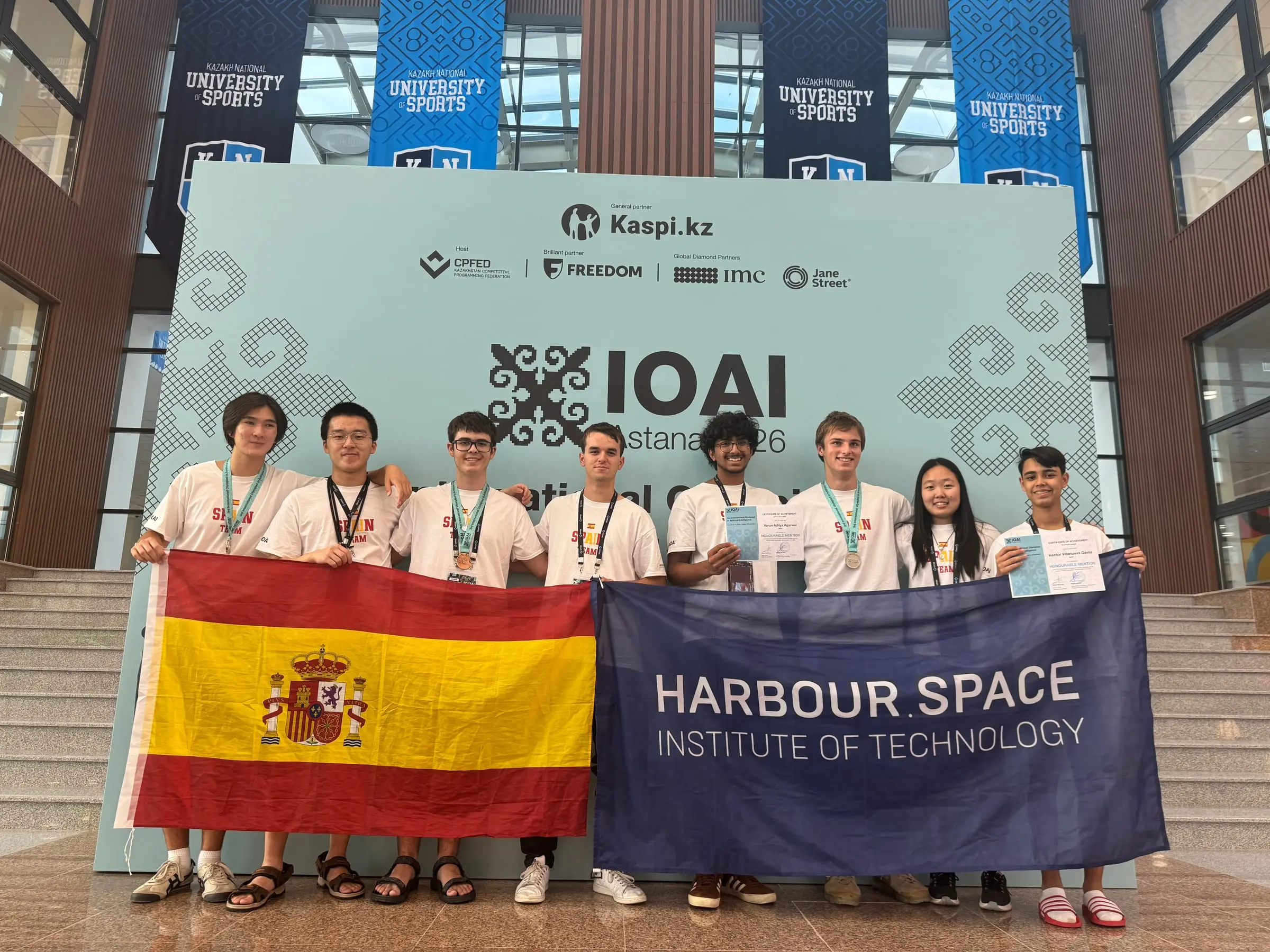
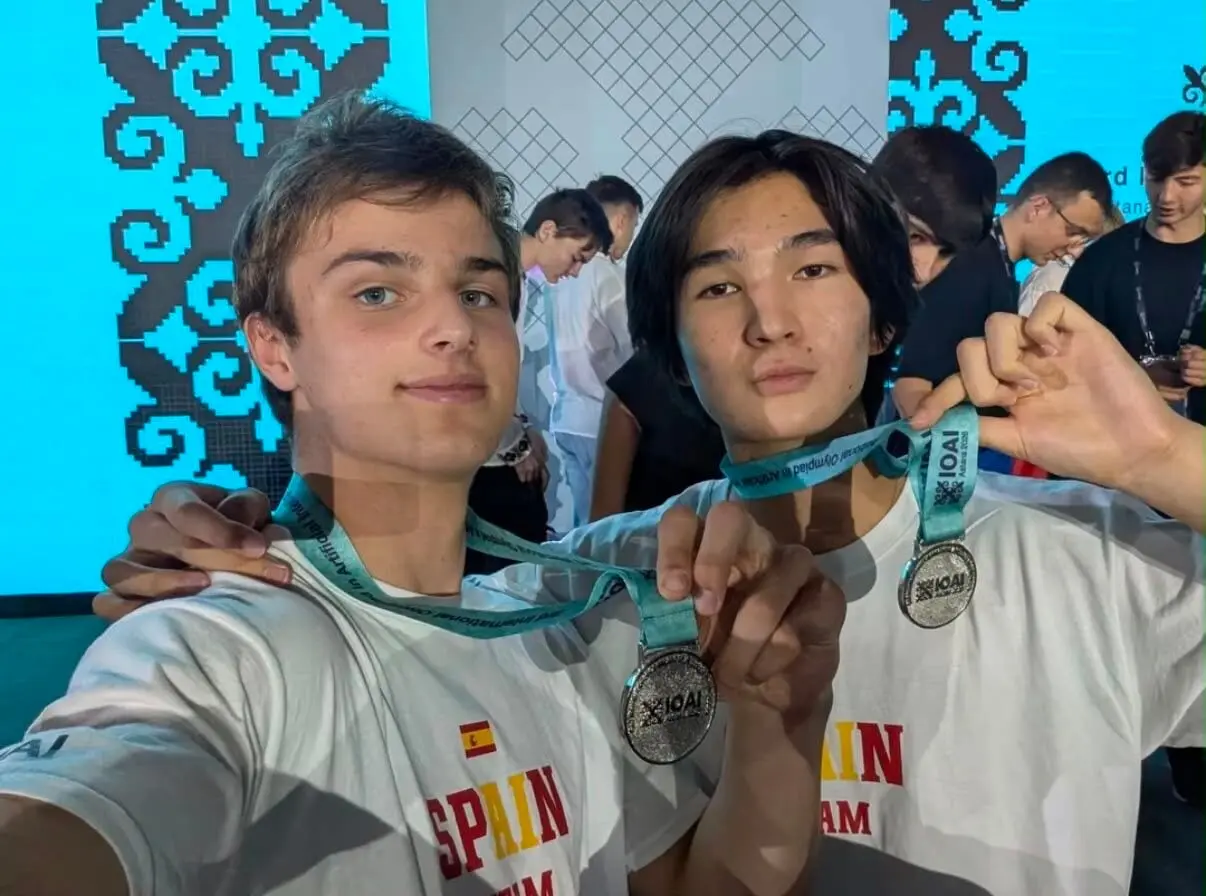
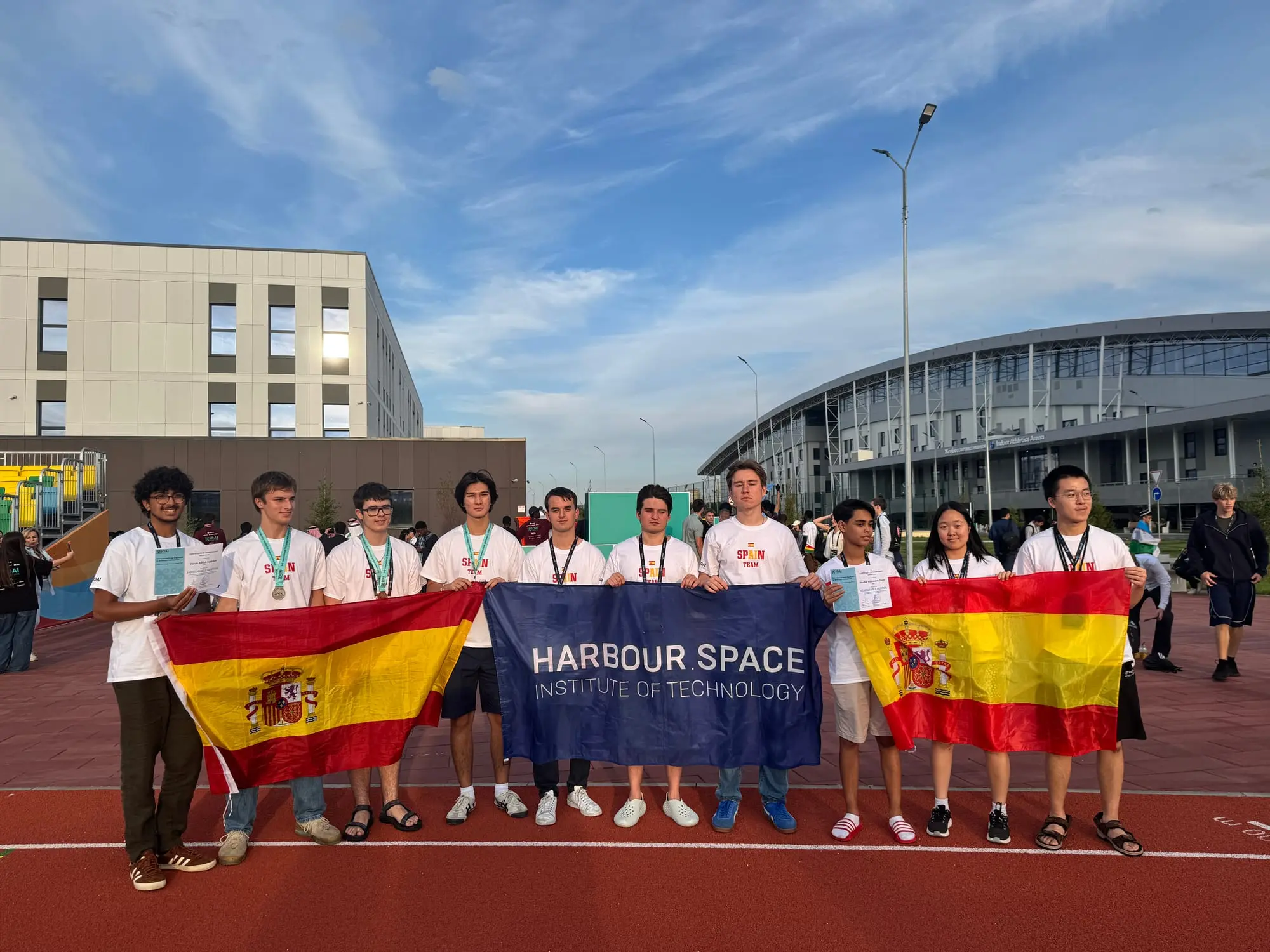
BARCELONA, 10 August 2026 — Spain competed for the first time in its history at the International Olympiad in Artificial Intelligence (IOAI), held in Astana (Kazakhstan) from 2 to 8 August 2026, and returned home with two silver medals, one bronze medal and three honourable mentions. Eight secondary-school students represented the country alongside 466 of the world’s best young AI talents from 108 countries and territories.
In the official team ranking, Spain placed 26th out of 108 countries and territories — ahead of established scientific powers such as Japan, Germany, Belarus and New Zealand — a remarkable result for a country fielding a national team for the first time.
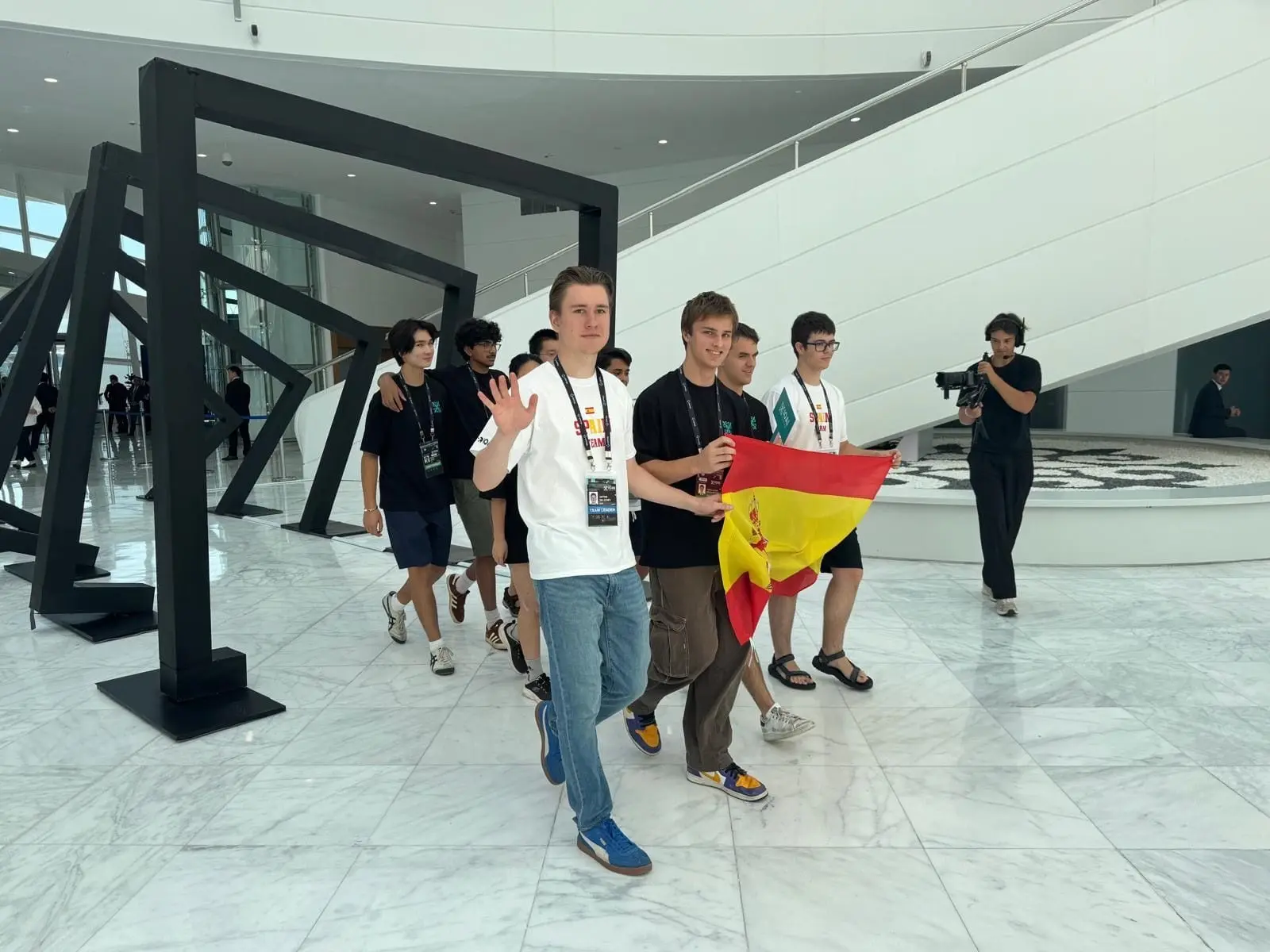
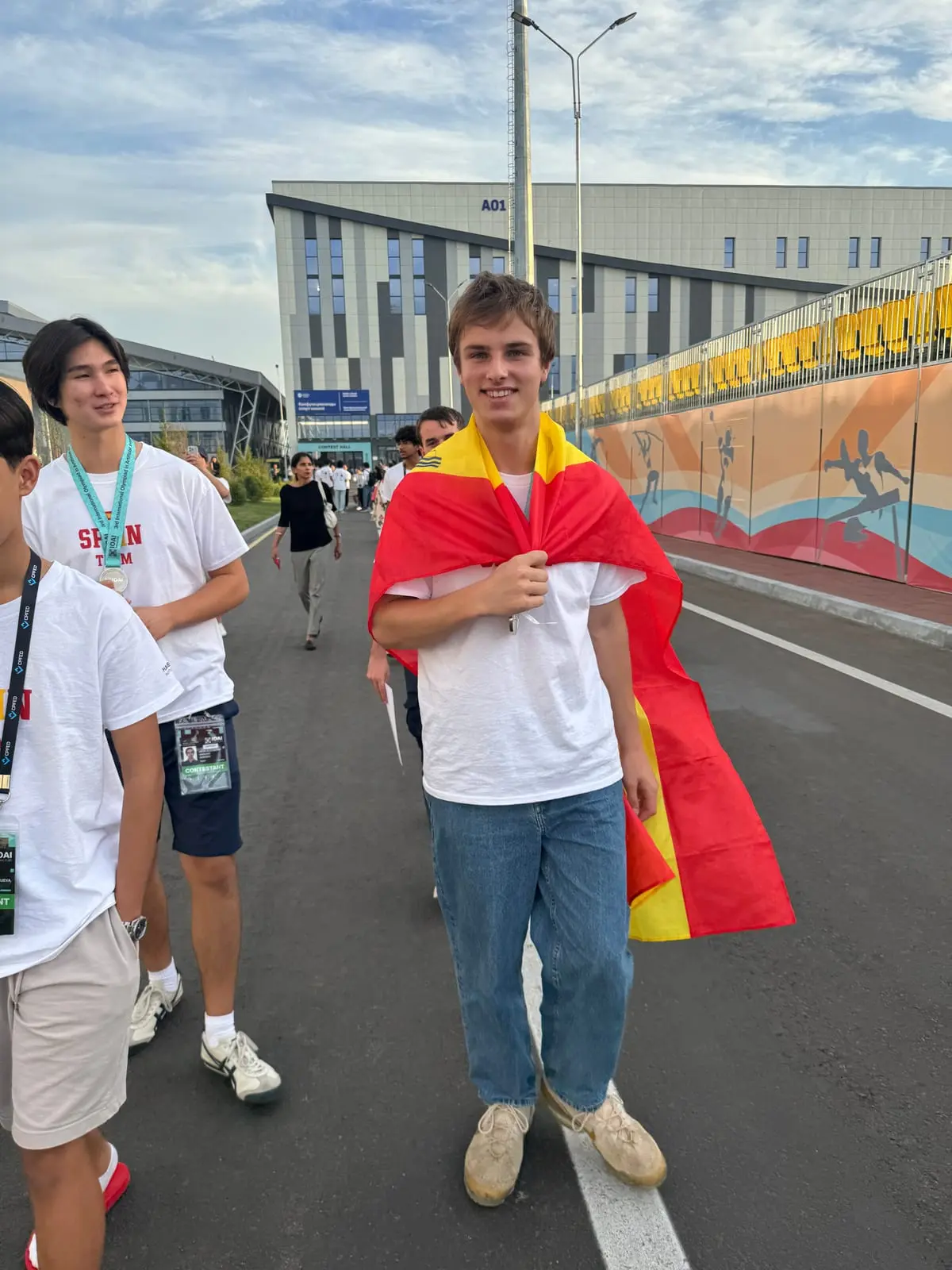
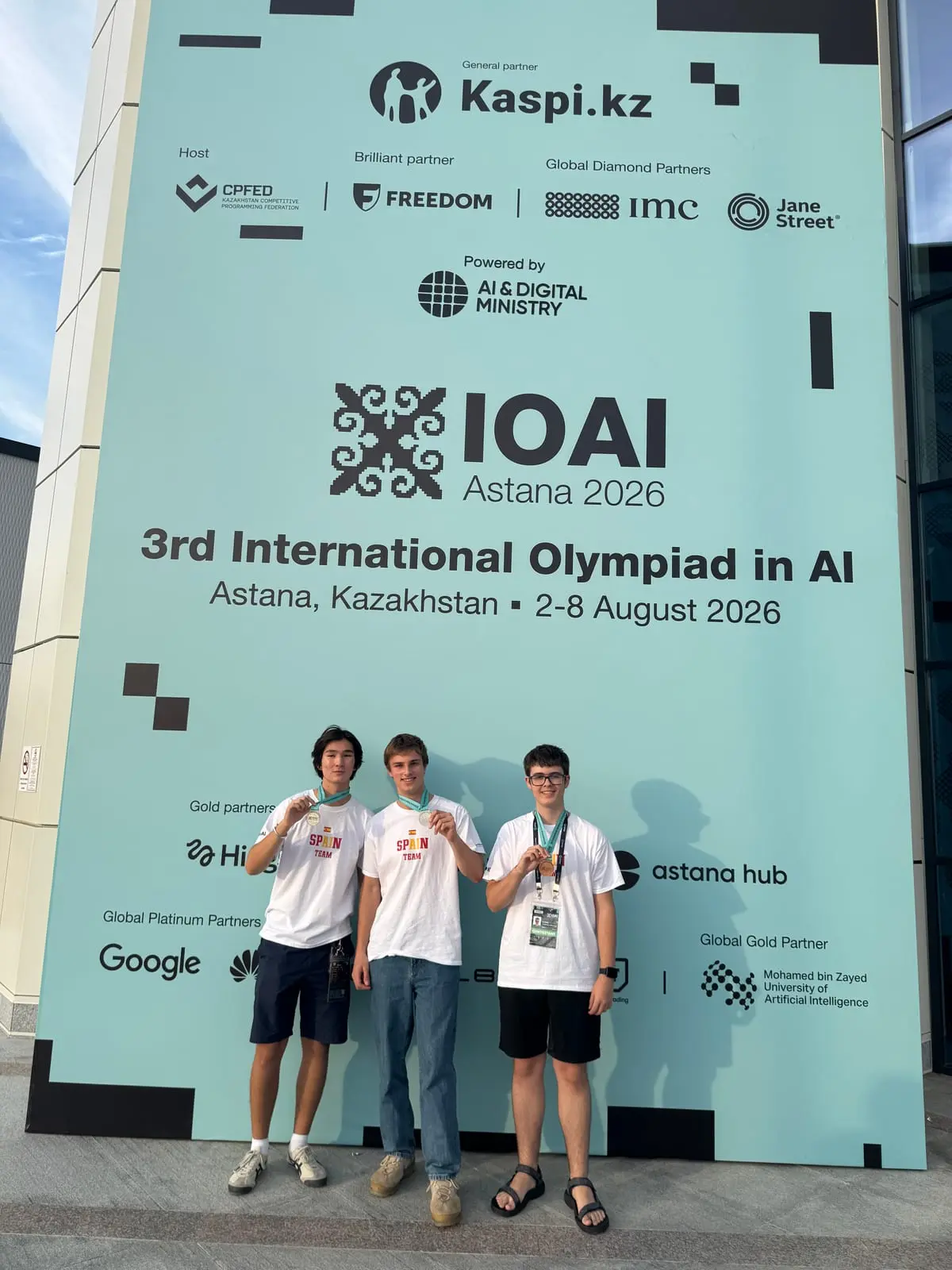
The two silver medals went to Henri-Alexander Semenov (American School of Barcelona) and Tomás Lázaro Danoni (Institut Tiana). Llúria Torras Arcusa (Escola el Cim, Vilanova i la Geltrú) took bronze. Honourable mentions went to Héctor Villanueva Dávila (The British School of Tenerife), Varun Aditya (St. George’s British School) and Roberto Lloréns Dueñas (Escola Professional Salesians de Sarrià). Ruiwen Zheng and Fanxi Xiang completed the delegation.
The students earned their places through a demanding selection process, several months of online training and a two-week residential academic camp in Tenerife, where they prepared alongside delegations from Georgia, the Netherlands, Switzerland, Latvia and Ukraine. The programme was organised and fully funded by Harbour.Space and its Leagues of Code platform, which hold the official IOAI accreditation in Spain. At the competition itself, the students faced two individual six-hour exams with advanced machine learning and artificial intelligence problems.
Competing for the first time and finishing ahead of countries with decades of olympiad tradition shows the depth of AI talent in Spanish classrooms. These students are the beginning of something much bigger.
— Svetlana Velikanova, IOAI representative in Spain
I started programming only six months before the Tenerife camp. I began with the free Leagues of Code exercises, kept working through the programming and maths problems, passed the first round, then the second and then the third, and before I knew it I was on the team.
— Tomás Lázaro Danoni, silver medallist (Institut Tiana)
Founded in 2024, the IOAI is the newest and fastest-growing of the major international science olympiads. In just two years it has become the second largest in the world by number of participating countries, behind only the 67-year-old International Mathematical Olympiad, with a 77% year-on-year increase in participants, the fastest growth of any major science olympiad.
About Harbour.Space Institute of Technology
The IOAI-accredited body in Spain, responsible for selecting and training the country’s teams.
Harbour.Space is a private higher-education institution specialising in the integrated teaching of technology, entrepreneurship and design, founded in 2015 and headquartered in Barcelona, with a network in Spain, Asia and the United States.
It has a long track record in the major international informatics and competitive programming olympiads: it trained the first Spanish-born and Spanish-trained gold medallist at the International Olympiad in Informatics (IOI) and won gold at the ICPC World Finals (4th in the world, 1st in Europe, ahead of institutions such as MIT, Stanford, Oxford and Cambridge).
It organised every stage in competition format and offered the same support, free of charge, to all students: open access to the self-study modules of Leagues of Code — its maths and computer-science training platform — a multi-month online intensive with expert coaches for the top qualifiers, and a two-week international camp for the selected team. Harbour.Space also covered the participation and travel costs to Kazakhstan for both teams, together with two teachers and two observers.
Press contact
Patricia Carranza · patricia.carranza@harbour.space · 617 323 878