On Saturday 7 November, a group of students from the IOAI Spain training course took on Mock Round 1. It follows the format of the International Olympiad in Artificial Intelligence (IOAI): six hours, from 12:00 to 18:00 (Madrid time), three tasks and the official IOAI scoring. It’s a tough test, built for students who already have strong technical foundations, and almost everyone still came away with points. For many of them, the goal is clear: a place on the team that will represent Spain at IOAI 2027, held in Singapore from 4 to 10 July.
If you’d like to try it, the next one is on Sunday 10 January 2027. It’s free and open to any student registered with IOAI Spain.
Results
Rubén took first place by a wide margin. He was the only one to score on all three tasks.
| Place | Student | Points (max. 300) |
|---|---|---|
| 1 | Rubén | 260.3 |
| 2 | Henri | 134.9 |
| 3 | Fanxi | 125.9 |
| 4 | Tommy | 101.1 |
| 5 | Rafael | 62.5 |
| 6 | Rita | 49.1 |
| 7 | Nacho | 33.0 |
How scoring works. Each task is worth up to 100 points, just like at the IOAI. Every task comes with a baseline solution: a simple model that serves as a starting point. Matching it earns 0 points. The task authors also prepare a reference solution, which is far more refined, and reaching 90% of its result earns 100. The closer you get, the more points you earn.
The three tasks
- Malware Hunt. Given hourly activity data for 1,000 computer processes, students had to explain how much performance the system lost each hour. Only simple linear models were allowed, so the key was working out which processes really mattered.
- Lost in Translation. Given a short Python program, students had to find the same program among versions written in C++, Java and JavaScript. To get it right, the model had to understand what the code does, not just what it looks like.
- Cell Types Across Patients. Using gene activity from around 260,000 cells from nine patients, students had to identify the type of each cell in two new patients the model had never seen.
What they said
I was happy to see that almost everyone got a result: close to 90% of participants scored on at least one task.
— Artem Seleznev, IOAI Spain academic team
Ruiwen, or Rita as everyone calls her, submitted all three tasks. The last one was the hardest for her:
Task 3 was the hardest for me. The baseline solution didn’t work for me, so I tried a simplified version. Training took a long time and I ran out of time to submit the final version, but at least I submitted what I had. The mock round is good practice for handling errors and waiting times, and a chance to find your weak spots.
— Rita
The Tenerife effect
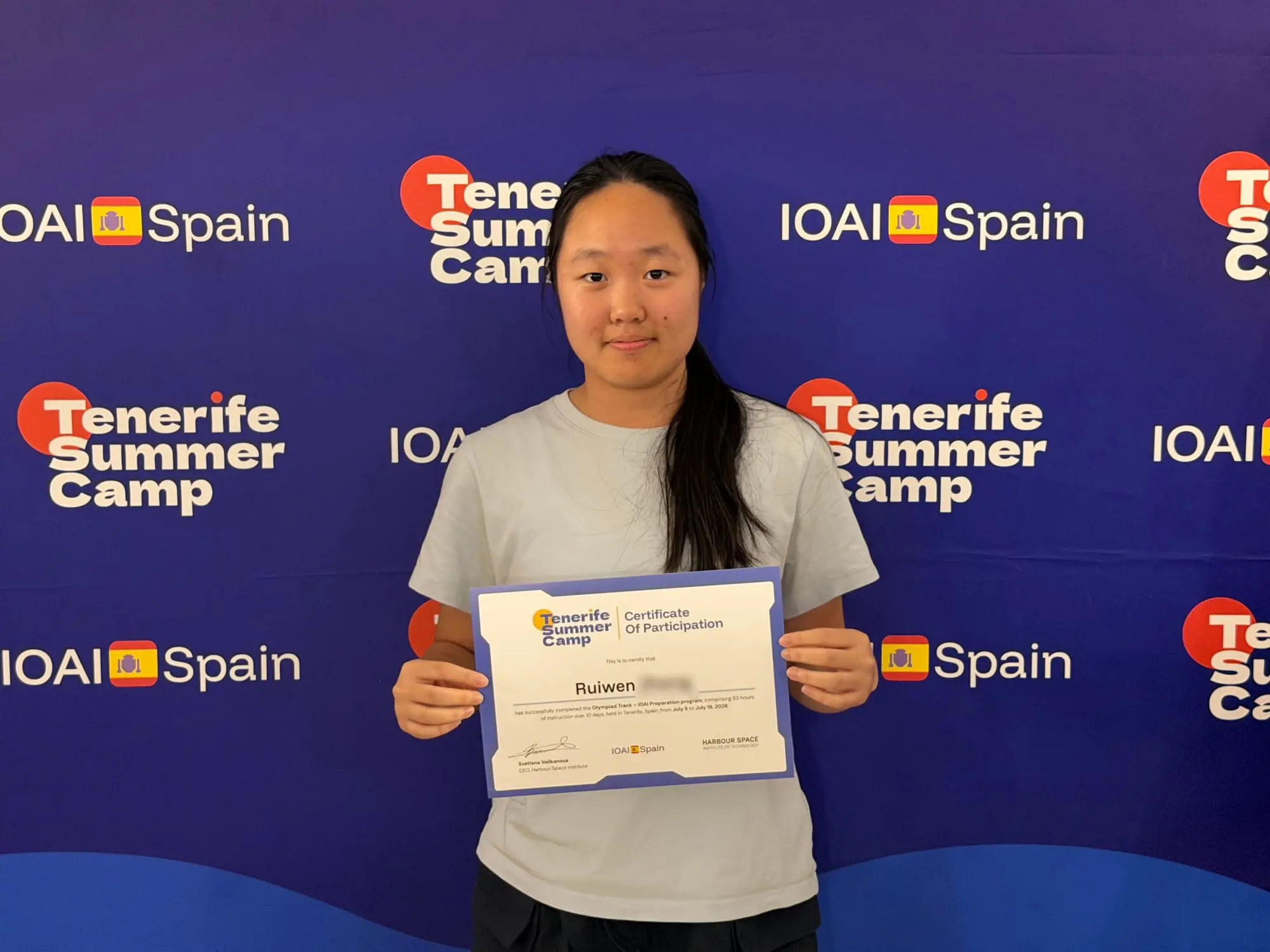
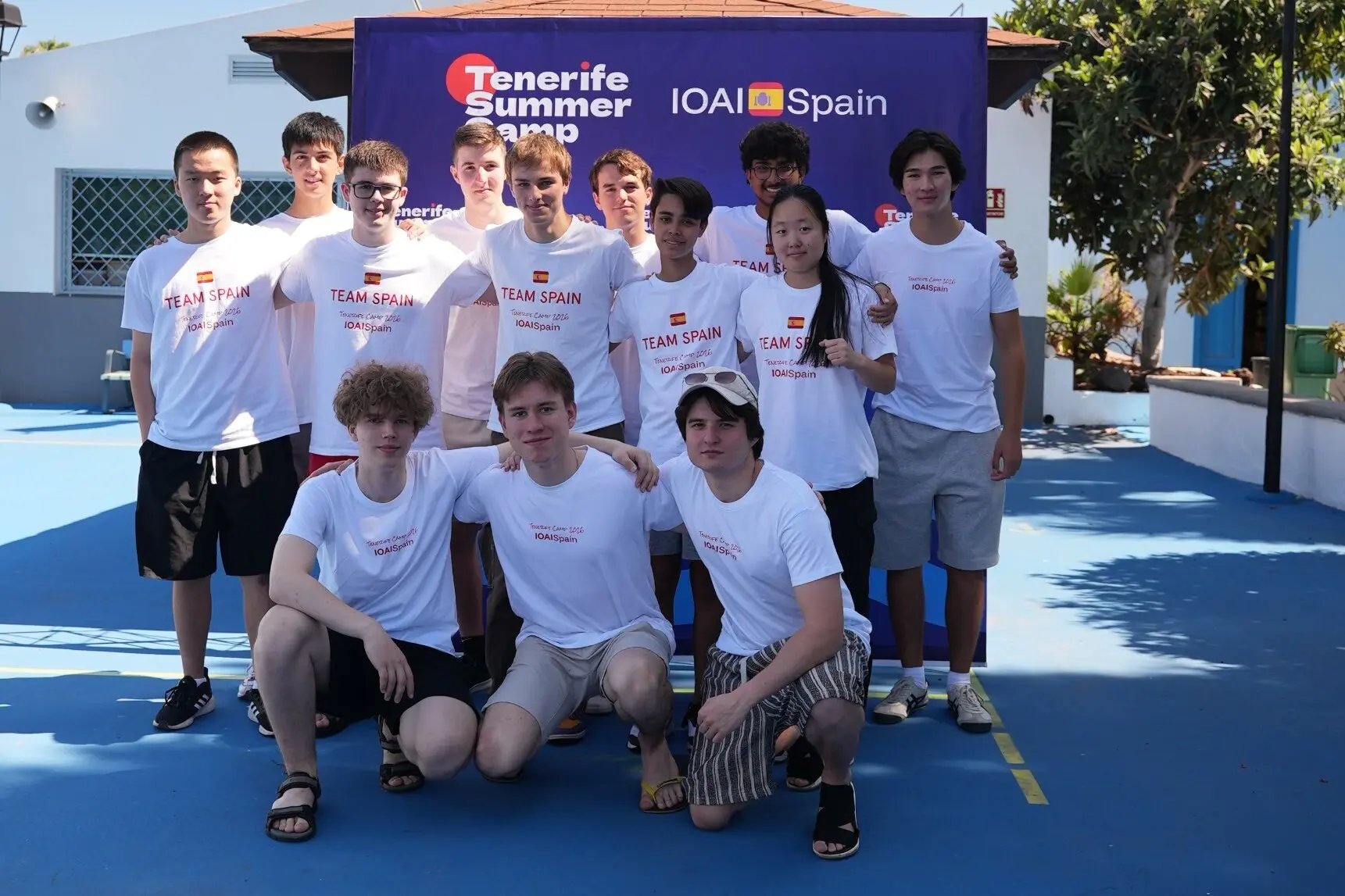
Most of the students in the mock round spent part of their summer at our Tenerife camp, and it shows. If you want to prepare seriously for the Olympiad, the next camp is a great opportunity. We’ll share all the details very soon.
Mock Round 2: Sunday 10 January 2027
The second mock round covers Module 2 of the course, on neural networks, and falls on the last day of the winter break. Rita’s advice is simple: “Sign up! It’s hard, but unlike theory classes, it shows you what a real competition is like.”
How to take part:
- Register for free at ioai-spain.org/sign-up.
- Join the course on Leagues of Code. Note: it takes one or two days for your access to be activated, so don’t leave it until the last minute.
- Create a Kaggle account. That’s where the tasks are published.
Want to practise first? The Mock Round 1 tasks are still available inside the course on Leagues of Code. The official round has closed, so if you’d like your solution reviewed, ask the teachers in the course chat.