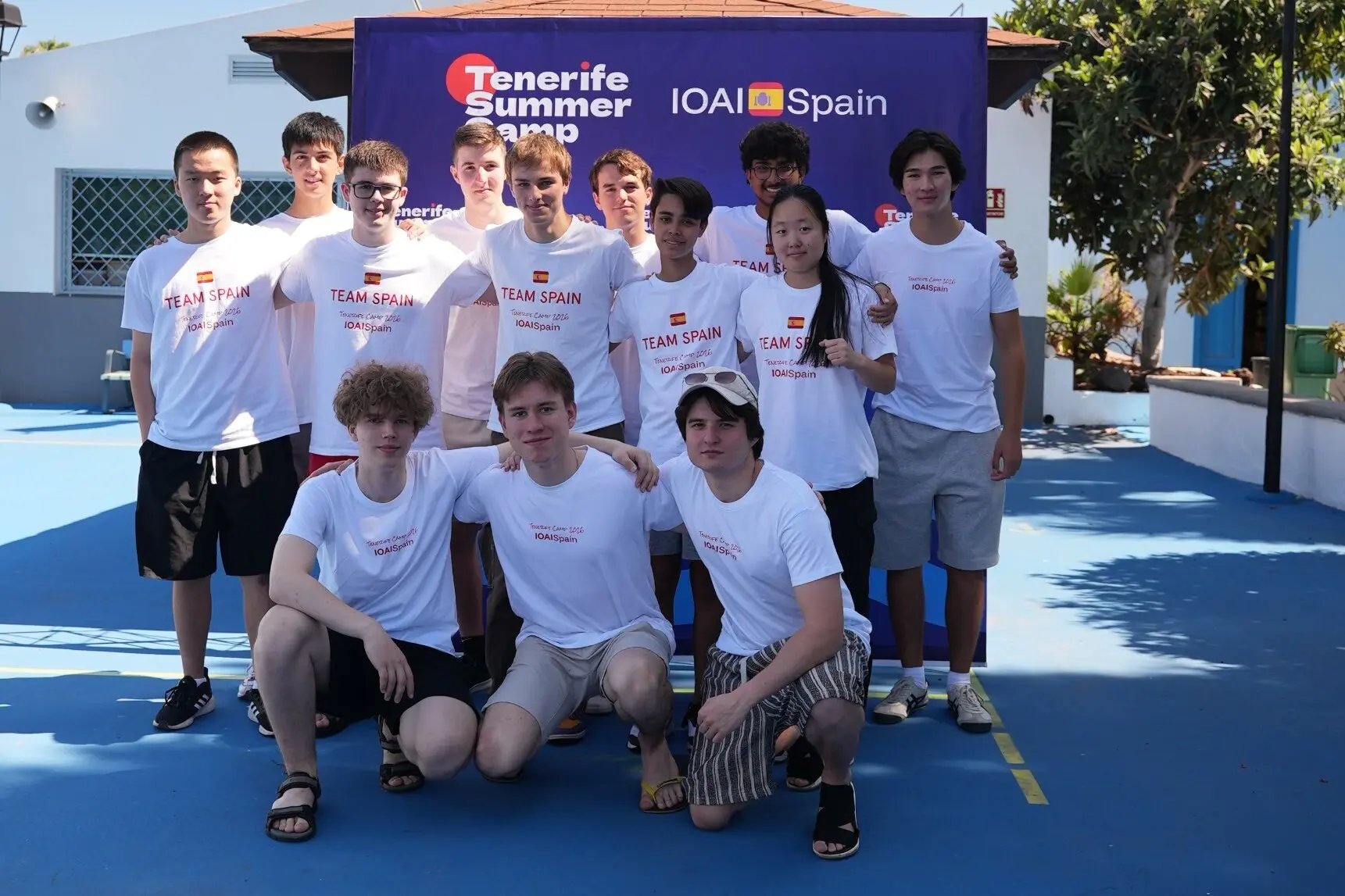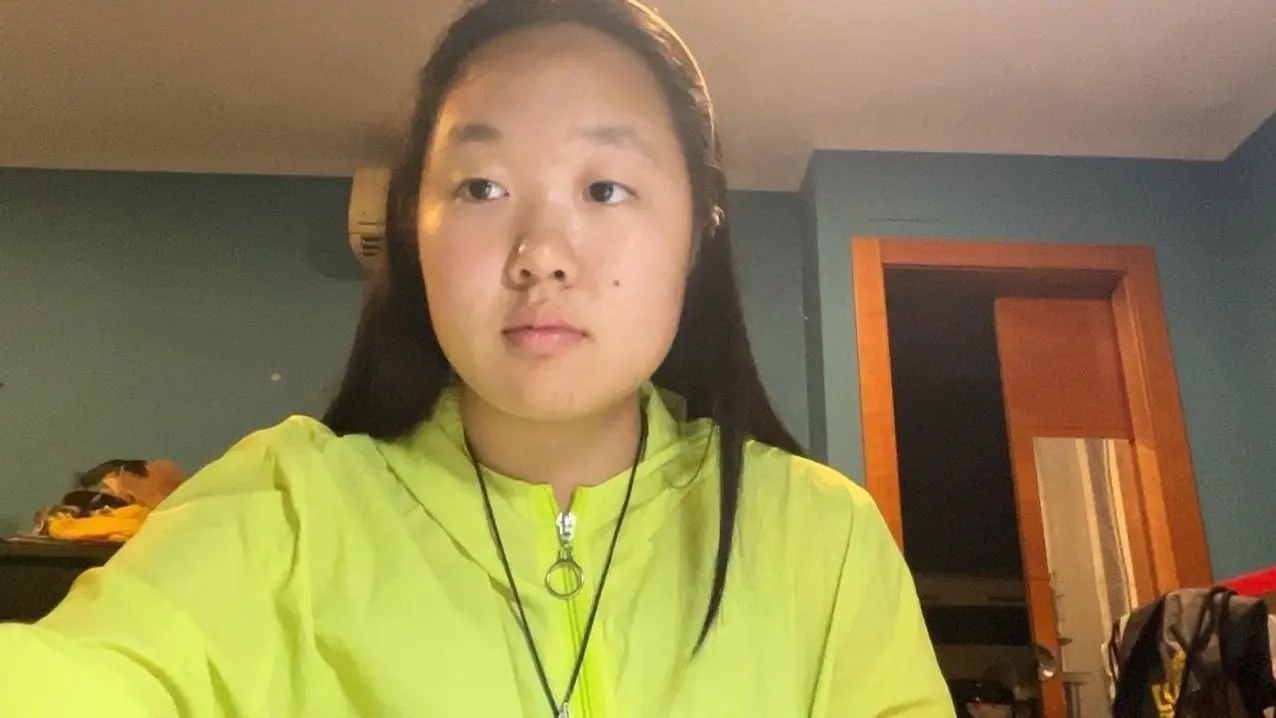
Before the International Olympiad in Artificial Intelligence (IOAI), Rita, the only girl on Spain’s team, had been looking up the numbers. How many girls take part in competitions like this?
It says 3% are girls. And I was like, no way! This can’t be true.
— Rita
She had felt it already. “I always felt a bit intimidated,” she said. She wondered why there weren’t more girls, on her team or on the others.
Many people would stop there. Rita didn’t. “But this motivated me more.”
Where it began
Rita can’t say exactly when science became hers. “I think when I was 12, maybe,” she said. “There were online chemistry classes and I found them interesting. I started teaching myself.”
Then came physics, and computer science, which she chose as an optional subject at school.
But how did she end up on the team? In her words: “Because of my teacher.”
The teacher said something to three students: Rita and two boys. “This is something you can try. Because you’re good at maths, you’re good at computer science. Why don’t you try it?”
No speech, no promise. She simply told them the IOAI competition existed. A girl who taught herself chemistry at 12 was one conversation away from a door she didn’t know was there.
A small step
Even then, Rita did not storm in. It was completely new to her, and her final exams were coming. “At first I didn’t fully open it. I was just looking at the course.”
Then she noticed something. “Most of the maths and basic Python is something I can already do fluently.”
She went into the last round of selection for the Spanish team with a modest plan: “I’m just going to try.” She was among those who qualified. “I felt very proud; I thought all my work had paid off.”
The day it almost broke
Then came the first day of the Olympiad: three problems she had prepared for again and again. “I had prepared a lot, a lot, a lot for those three problems, but none of them went perfectly for me. I couldn’t answer most of them.” The doubts came at once. “Why am I here? And all the self-doubt, and all those things.”
Rita answered that question herself. “Even if I didn’t do it perfectly on the first day, it doesn’t make me someone who suddenly doesn’t have the knowledge. I still have the knowledge; the knowledge is still mine.”
To the girl who is still deciding
Rita does not describe being a girl in this field as a wall. “I don’t feel this is something that prevents me or stops me from doing something I like.” And she puts it in a way that is hard to forget:
It’s like your height. You can be tall and do computer science. You’re short and you can do computer science. It doesn’t even matter.
— Rita
So what would she say to a girl who worries she won’t fit in? That the fear may not even be hers yet. “If she worries she won’t fit in, then I feel she hasn’t tried yet. Because she won’t know from her own experience.” The scary stories are ones she heard from someone else. “Maybe she’ll be in a robotics club with five other girls.”
Rita’s advice is not complicated, and it begins with something small. “Because you’ll never know, so you have to start first.” And the first step can be modest: “You have to get into it, maybe learn some Python.”
She has a request for teachers, too. “I think teachers should give more opportunities to other students, no matter whether they’re girls or boys, for something new they want to try.”
So if you are a girl reading this, here is Rita’s last word to you: “People are capable of many things they don’t know.”
And if you are a teacher, you might be the one who tells a student about the door.